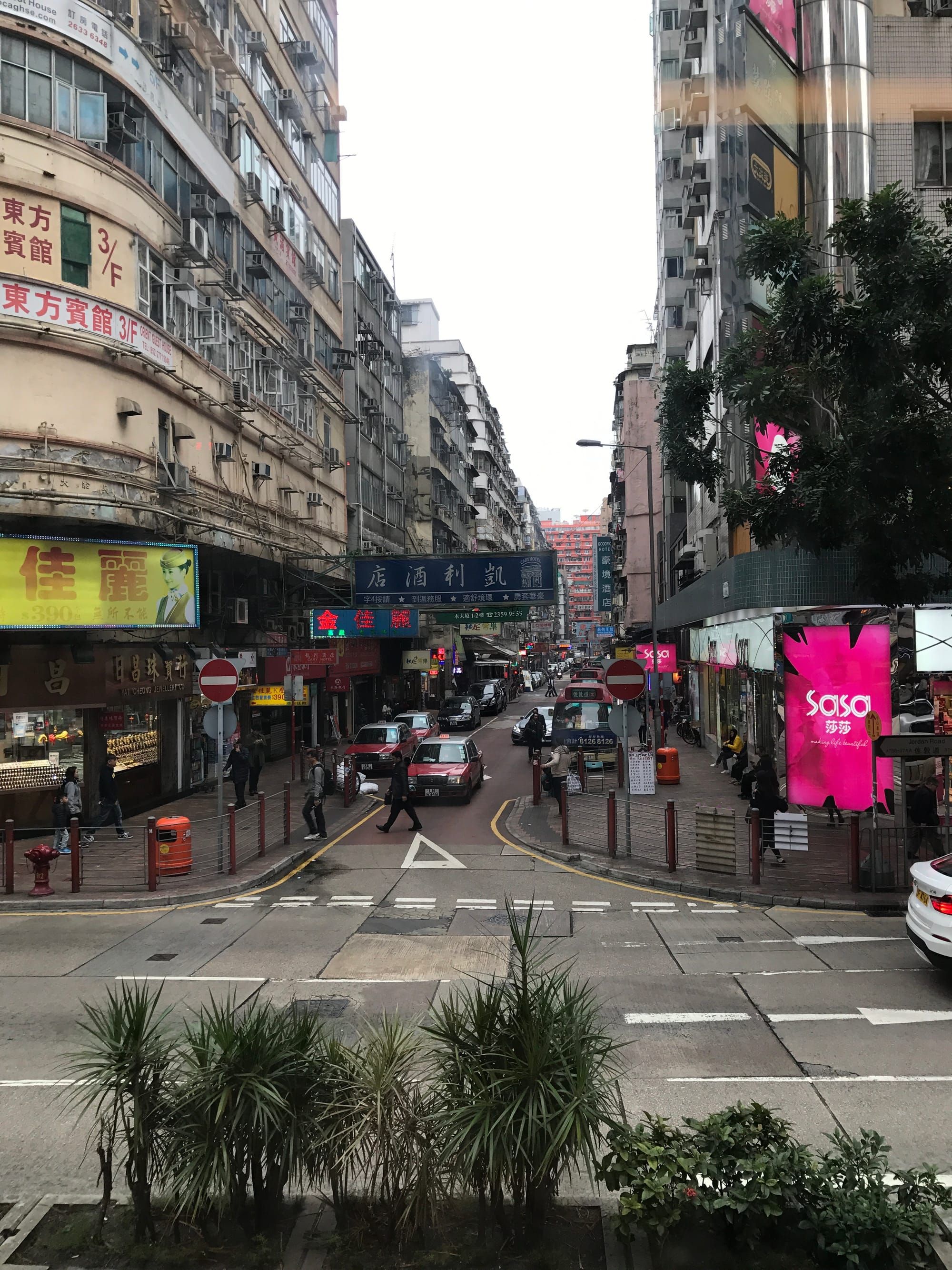
Our advice for Hong Kong starts with location: stay somewhere that makes the places you care about easy to reach, then resist filling every hour.
Vannessa and I have returned repeatedly for a mix of simple routines and good evenings—breakfast at a cha chaan teng, a harbour crossing, time walking through neighbourhoods, and dinner that turns into another stop.
Our friend Avery joined us on this trip. We split the stay around Shenzhen, spending three days in Hong Kong before crossing the border and returning for three more. It worked well, but there was plenty to occupy us without leaving the city.
Tsim Sha Tsui made a useful base
We stayed at The Langham for both parts of the visit. The location suited us: the harbour, transport, and plenty of places to eat were within reach.
Returning to the same room after Shenzhen also made the second arrival easy. We were familiar with the hotel and could get straight back to enjoying the city.
We’d choose the area again for a trip with plenty of walking and outings on both sides of the harbour. When comparing hotels, look at where your evenings are likely to end as well as where your sightseeing begins.
At The Langham, we also enjoyed a cocktail-making class with Randall. We arrived with requests ranging from gin drinks and martinis to something involving peanut butter. He explained why the combinations worked as well as how to make them.
It was a good afternoon for anyone interested in cocktails. Ask the hotel about its current experiences when booking.
Use the MTR and make time for the ferry
The MTR handled most of our journeys. Get comfortable with it early; it makes exploring much easier.
We’d still make room for the Star Ferry, particularly at night. We liked the lower deck, the harbour air, and the view of the skyline. It’s a journey we continue to enjoy after several visits.
The trams and upper decks of buses are worthwhile for another perspective on the streets. Take a slower route occasionally and give yourself time to see what’s between your planned stops.
I also wanted Avery to ride in a Crown Comfort taxi. The one we found sounded like it was working through something personal, while the driver remained entirely unbothered.
It wasn’t the most elegant journey of the trip. It was one of the most memorable.
Keep some meals simple
A cha chaan teng is a good start to the morning. Milk tea, eggs, and toast have served us well before heading out for the day.
We enjoyed Australia Dairy Company after a recommendation. Go for a straightforward meal and expect direct, efficient service. It’s somewhere to get fed rather than settle into a long brunch.
We’d book a few meals that matter to you and leave others open. Some of our evenings changed because a friend knew somewhere nearby or someone suggested another place to eat. Having room to say yes was useful.
Put Happy Valley on the list
If your visit overlaps with a race meeting, Happy Valley is one of our first recommendations.
We go for the company, the crowd, and the excitement when the horses come past. Our racing knowledge is limited, and our betting results do little to suggest otherwise.
It’s a good evening for friends who want something happening around them. Watch a few races, get a drink, and decide whether to stay or carry on elsewhere.
Our Happy Valley guide covers what to expect and the practical details.
Leave an evening open
One of our best nights started with friends, expanded to include people we’d met only hours earlier, and ended up in a karaoke bar in Central.
The singing was terrible. Nobody appeared concerned.
Afterwards, someone led us to Holy Eats, where we’d been years earlier with an entirely different group. The familiar welcome made it an enjoyable return.
You can’t plan those exact encounters, but you can give an evening enough room for them. That flexibility has consistently been part of what we enjoy about Hong Kong.
What we’d recommend for a first visit
Allow several days and choose a manageable set of priorities. We’d include time on the harbour, a neighbourhood beyond your hotel’s immediate surroundings, and at least one evening you’re looking forward to.
Choose your base carefully, use public transport, and keep some meals flexible. If you add Shenzhen, give it its own time and preparation.
Hong Kong rewards having options. We enjoy it most when a recommendation can still change the day.
Before you go
Practical information checked 19 September 2026.
Compare Octopus options. Physical and mobile versions have different arrangements. Choose the option that suits your device and payment setup. Official tourist Octopus options
Confirm the race meeting. Happy Valley usually races on Wednesday evenings during the September–July season, with exceptions. Check the specific date and venue. Official Happy Wednesday information
Keep a backup payment option. We recommend carrying some local cash as well as your usual payment method.
Check late transport and hotel experiences. Confirm the last service for your route and book activities such as cocktail classes directly with the hotel.
Prepare separately for Shenzhen. Check entry requirements and train departure procedures before buying tickets.